
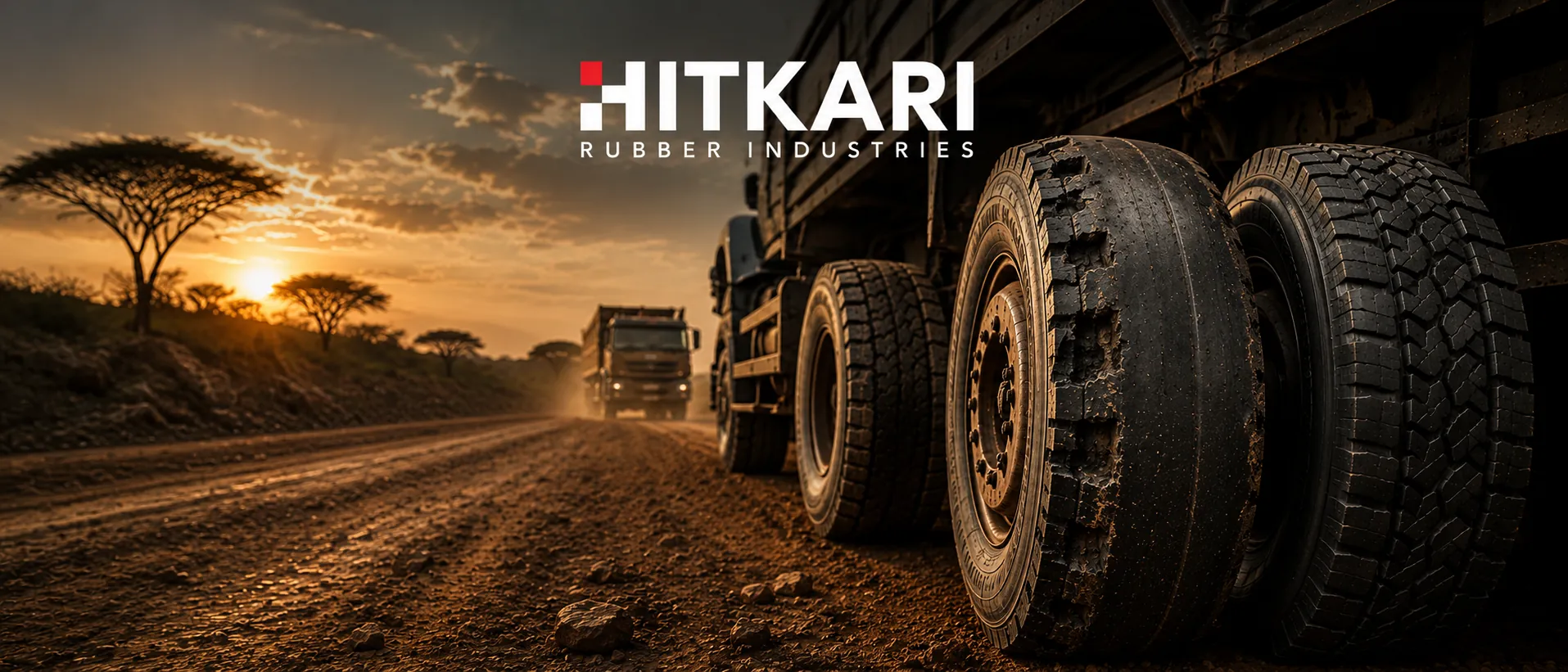
HCV Tyre Failures in Africa — How Precured Cold Tread Rubber Fixes It
Across Kenya, Nigeria, South Africa, and beyond, heavy commercial vehicle (HCV) operators face a daily battle against tyre failures that cost time, money, and lives. Rough roads, extreme heat, overloading, and long-haul distances combine to push tyres far beyond their design limits. For fleet managers and retreaders looking to cut costs without compromising safety, precured tread rubber Africa solutions are emerging as the most reliable answer to a problem that has long plagued the continent’s transport industry.
Why HCV Tyre Failures Are So Common in Africa
African road infrastructure presents unique challenges that are unlike almost anywhere else in the world. Potholes, unpaved stretches, sharp gravel, and extreme temperature swings across day and night cycles create conditions that degrade tyres at an accelerated rate. When you add the reality of overloaded trucks — a common practice across many corridors in Kenya, Nigeria, and South Africa — the stress on tyre casings becomes enormous.
Heat is another compounding factor. In sub-Saharan regions, road surface temperatures can climb well above 60°C during peak hours. This causes the rubber compound in standard retreaded tyres to soften, lose adhesion, and separate from the casing prematurely. The result is blowouts, tread peeling, and complete tyre failures — often on remote roads where breakdown support is difficult to reach.
Fleet operators and retreaders who understand these conditions know that not all tread materials are equal. The quality of tread rubber used in retreading operations determines whether a retread will last the expected mileage or fail halfway through its service life.
What Is Precured Cold Tread Rubber and Why Does It Matter in Africa
Precured tread rubber is a retreading material that comes fully cured at the factory, ready to be bonded onto a prepared tyre casing using cushion gum and an autoclave or chamber curing process at relatively low temperatures. Unlike conventional hot retreading (camelback), precured tread rubber does not require the extreme heat of a mould to shape the tread pattern — the pattern is already formed during the manufacturing process.
This distinction matters enormously for African conditions. Because the tread rubber is cured uniformly in controlled factory conditions, the compound quality and tread depth consistency are far superior to what is achievable with site-level hot retreading. The bonding process in cold retreading is also gentler on the original tyre casing, meaning good casings can be retreaded more times without structural compromise.
For retreaders in Nairobi, Lagos, or Johannesburg, switching to precured tread rubber Africa-compatible processes means delivering a more durable product to fleet clients — a product that holds up under the conditions that routinely destroy inferior retreads.
The Heat Resistance Advantage of Precured Tread Rubber
One of the most critical performance metrics for any tyre in Africa is heat resistance. High ambient temperatures, combined with the heat generated by heavy loads and long-distance travel, create a thermal environment that breaks down conventional rubber bonds rapidly. Precured tread rubber compounds are engineered to withstand sustained elevated temperatures without delaminating or losing structural integrity.
This thermal stability is not accidental — it is the result of precise compounding at the manufacturing stage. When a quality supplier like Hitkari Rubber Industries produces precured tread rubber, the compound formulation is specifically designed to maintain its mechanical properties across a wide temperature range. For HCV operators running East African or West African corridors, this translates directly into fewer roadside failures and longer tyre service life.
Retreaders who have made the switch from hot tread to precured cold tread consistently report that casings and treads last longer, customers come back more satisfied, and warranty claims drop significantly. In markets where reputation drives repeat business, this matters.
How Precured Cold Tread Rubber Reduces Fleet Operating Costs
Tyre costs represent one of the largest variable expenses for any HCV fleet. In African markets where new premium tyres carry a significant price premium relative to local wages and transport economics, retreading is not just an option — it is essential for operational viability. However, poor quality retreads that fail early do not save money; they compound costs through downtime, replacement, and potential accident liability.
Precured tread rubber retreads, when done correctly with quality materials, can deliver mileage performance that approaches that of new tyres at a fraction of the cost. The key is the consistency of the tread compound and the quality of the cushion gum used to bond tread to casing. Hitkari Rubber Industries supplies both precured tread rubber and cushion gum rubber that are engineered to work together, ensuring bond integrity across the full service life of the retread.
Fleet managers who calculate total cost per kilometre — rather than simply upfront tyre cost — consistently find that quality retreads using precured tread rubber deliver the best economics. This is the calculation that leading logistics companies across South Africa, Kenya, and Nigeria are increasingly making.
Choosing the Right Precured Tread Rubber Supplier for African Markets
Not all precured tread rubber is equal, and the African market has seen its share of low-quality imports that fail to deliver the promised performance. When evaluating a supplier, retreaders and fleet operators should look for several key indicators of quality. First, the supplier should be able to demonstrate consistent compound hardness and tensile strength across production batches. Second, the tread pattern depth and uniformity should be verifiable. Third, the supplier should have a track record of supplying to demanding export markets.
Hitkari Rubber Industries has been manufacturing rubber products since 1980 and exports precured tread rubber to markets across Africa, the UAE, and Latin America. This export experience means the products are engineered to perform in the same harsh conditions that African retreaders and fleets face every day. Sourcing from a manufacturer with this depth of experience provides retreaders with the assurance that quality will be consistent from order to order.
It is also worth noting that precured tread rubber Africa compatibility includes having the right widths, thicknesses, and tread patterns to suit the most common HCV tyre sizes in regional markets. Hitkari offers a range of dimensions to meet these diverse needs.
Proper Retreading Practices Maximize Precured Tread Performance
Even the best precured tread rubber will underperform if the retreading process itself is flawed. Casing inspection is the foundation of a good retread — only sound casings free of structural damage should be used. Buffing must be done to the correct diameter and surface texture to ensure proper cushion gum adhesion. The cushion gum must be applied evenly, and the curing cycle must be carefully controlled for temperature and duration.
Retreaders in Africa who invest in proper equipment and training find that their precured cold tread retreads consistently meet or exceed expected mileage targets. This professionalism also builds their reputation among fleet operators, who increasingly recognize that not all retreaders are equal. In competitive markets like Nairobi or Johannesburg, the retreaders who consistently deliver quality are the ones who grow their businesses through referrals and repeat contracts.
Hitkari Rubber Industries provides technical support to retreaders who use their products, helping ensure that the full potential of the precured tread rubber is realized in the final product.
The Future of HCV Tyre Management in Africa
Africa’s freight and logistics sectors are growing rapidly, driven by urbanization, infrastructure investment, and expanding intra-continental trade. As fleets grow and operators become more sophisticated in their cost management, the demand for quality retreading solutions will only increase. Precured tread rubber is at the center of this shift, offering a technically superior and economically compelling alternative to both new tyres and poor-quality retreads.
Countries across East, West, and Southern Africa are seeing retreading capacity expand, with more professional operations replacing informal workshops. This professionalization raises the bar for input material quality — and suppliers who can consistently deliver precured tread rubber Africa-quality products will be the ones who benefit most from this growth.
Hitkari Rubber Industries is positioned to support this growth, with decades of manufacturing experience, a commitment to consistent quality, and an understanding of what African road and climate conditions demand from retread materials.
To learn more or get in touch with our team at Hitkari Rubber Industries, visit our contact page.