
What Is Cushion Gum Rubber and Why It Is Critical in Tyre Retreading
In the world of tyre retreading, much attention is paid to the tread rubber itself — its compound, its pattern, its wear properties. But there is a quiet hero in the retreading process that determines whether the tread actually stays attached to the casing or fails prematurely. That hero is cushion gum rubber. For anyone serious about producing quality retreaded tyres, understanding cushion gum rubber retreading is just as important as understanding the tread material. This article explains what cushion gum rubber is, why it is critical to the retreading process, and what to look for when sourcing it.
What Is Cushion Gum Rubber?
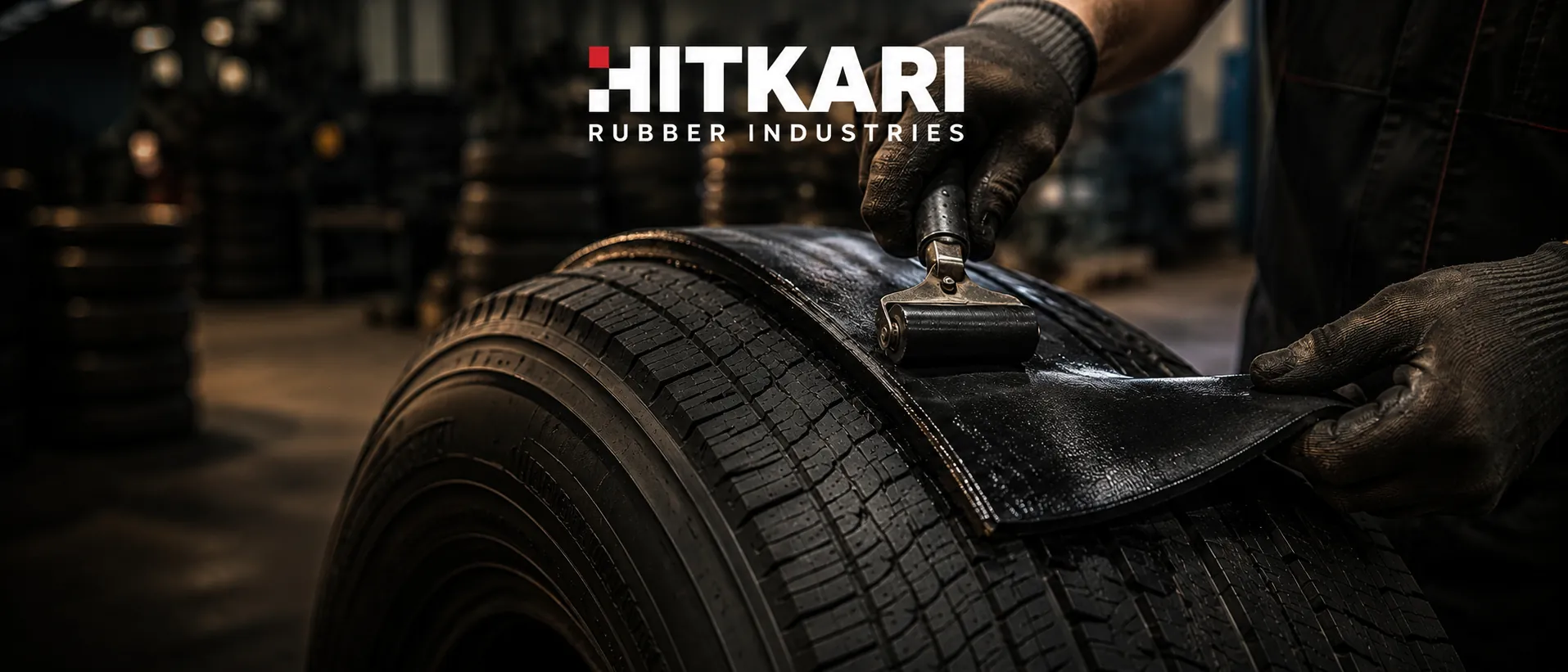
Cushion gum rubber is a thin, uncured rubber compound layer applied between the prepared tyre casing and the precured tread strip during the cold retreading process. Unlike the tread itself, which arrives at the workshop already cured, cushion gum is intentionally left uncured so it can vulcanise during the final curing stage and bond everything together.
It looks like a thin sheet of soft, tacky rubber — typically between 0.6 and 1.0 millimetres thick. The compound is formulated to flow slightly during curing, filling any micro-gaps between the casing and the tread, then vulcanise into a strong, permanent bond.
While the precured tread provides the wear surface and grip, the cushion gum provides the mechanical bond that holds the whole system together for hundreds of thousands of kilometres of road service.
The Role of Cushion Gum in the Retreading Process
In a typical cold retreading workshop, the steps look like this: the worn tyre casing is inspected, buffed to a uniform shape, and prepared with skived sidewalls. A layer of cushion gum is then applied evenly to the buffed surface. The precured tread strip is laid on top of the cushion gum, the assembly is sealed in an envelope, and placed in a curing chamber.
Inside the chamber, controlled temperature and pressure cause the cushion gum to vulcanise. As it cures, it forms chemical bonds with both the underlying casing and the overlying precured tread. By the time the cycle ends, the three layers — casing, cushion gum, and tread — have become a single integrated tyre.
This bonding step is the single most important quality moment in the retread. If the cushion gum fails to bond properly, the tread will separate from the casing in service, sometimes catastrophically. Cushion gum rubber retreading therefore stands at the centre of retread quality.
Why Cushion Gum Quality Is Critical
Cushion gum quality is critical for several reasons. First, it determines bonding strength. A poor compound will not form strong enough chemical bonds during curing, and the tread will eventually peel away under road stress. Second, it determines temperature tolerance. Retreaded tyres operate at elevated temperatures during normal use — a good cushion gum maintains its bond strength at heat, while a poor one softens and fails.
Third, cushion gum must have the right tack — the natural stickiness that holds the assembly together before curing. Too little tack and the components slip during envelope vacuum. Too much tack and the layer captures air bubbles, leaving voids that become weak spots later.
Fourth, the compound must have consistent thickness and uniform composition across the sheet. Any variation in thickness creates uneven bond stress; any variation in composition creates spots that cure differently and bond unevenly.
Common Causes of Cushion Gum Failures
When retreaded tyres fail in service, cushion gum is often the root cause. The most common failure mode is delamination — where the tread separates from the casing during normal driving. This often shows up first as a small bulge in the tyre sidewall or tread, then progresses to a full separation.
Causes of cushion gum failure include using compound past its shelf life (the material slowly degrades and loses its bonding properties), incorrect curing temperature or time (under-cured cushion gum never reaches full strength), surface contamination on the casing (dust, oil, or moisture that prevents proper bonding), and incorrect thickness during application (too thin creates weak spots, too thick reduces compression bond strength).
Importantly, many of these failures trace back to either the quality of the cushion gum supplied or how it was stored before use. Retreaders who invest in proper cold storage of their cushion gum and source from reliable manufacturers see dramatically lower failure rates.
Properties to Look for in Cushion Gum Rubber
When evaluating cushion gum suppliers, retreaders should look for several measurable properties. Mooney viscosity in a specific range indicates the compound will flow correctly under heat. Specific gravity within manufacturer-stated tolerances indicates consistent composition. Scorch time at standardised test temperature indicates how much working time the operator has before premature curing.
Beyond test data, real-world performance indicators matter. Does the cushion gum bond reliably in your specific curing equipment? Does it tolerate normal variations in casing surface quality? Does it maintain bond strength after weeks of normal operation at full load?
Quality manufacturers provide technical data sheets with these specifications and stand behind their product with batch traceability. If a problem appears in service, they can trace the cushion gum back to a specific production batch and investigate. Suppliers who cannot provide this traceability are best avoided for serious cushion gum rubber retreading operations.
Storing and Handling Cushion Gum Correctly
Even the best cushion gum will fail if stored or handled incorrectly. The compound has a finite shelf life — typically six to twelve months from manufacture — and must be stored at controlled temperatures (typically below 25 degrees Celsius) and away from sunlight, ozone sources, and contamination.
Retreaders should rotate stock on a strict first-in, first-out basis and check manufacture dates on every batch received. The cushion gum should be removed from cold storage and allowed to reach workshop temperature before application — applying cold material reduces tack and increases the risk of bonding voids.
Once a roll is opened, it should be used within a short window to prevent surface contamination from workshop dust. Many top retreading workshops dedicate a clean room or area specifically for cushion gum application to minimise contamination.
Why Sourcing Cushion Gum from India Makes Sense
India has emerged as one of the world’s most respected sources for cushion gum rubber retreading materials. Indian manufacturers combine decades of compound formulation experience with rigorous quality testing and competitive pricing — a combination that has made them preferred suppliers for retreaders across the UAE, Africa, Latin America, and beyond.
Hitkari Rubber Industries has been manufacturing cushion gum rubber since 1980, formulating compounds specifically for the demands of the global retreading industry. Our cushion gum is designed to bond reliably across a wide range of casing conditions and curing equipment, with batch-to-batch consistency that retreaders depend on.
For retreaders evaluating new suppliers, cushion gum rubber should be tested and approved alongside precured tread rubber from the same source. When both are formulated to work together, the bonding system performs as a single engineered solution rather than a mismatched combination.
Related Articles
- Cushion Gum Rubber Essentials: Bonding Precured Cold Tread Rubber with Precision
- How Precured Cold Tread Rubber Improves Grip and Longevity in HCV Retreading
- Precured Cold Tread Rubber vs Camelback Hot Tread — Complete Comparison
To learn more or get in touch with our team at Hitkari Rubber Industries, visit our contact page.