
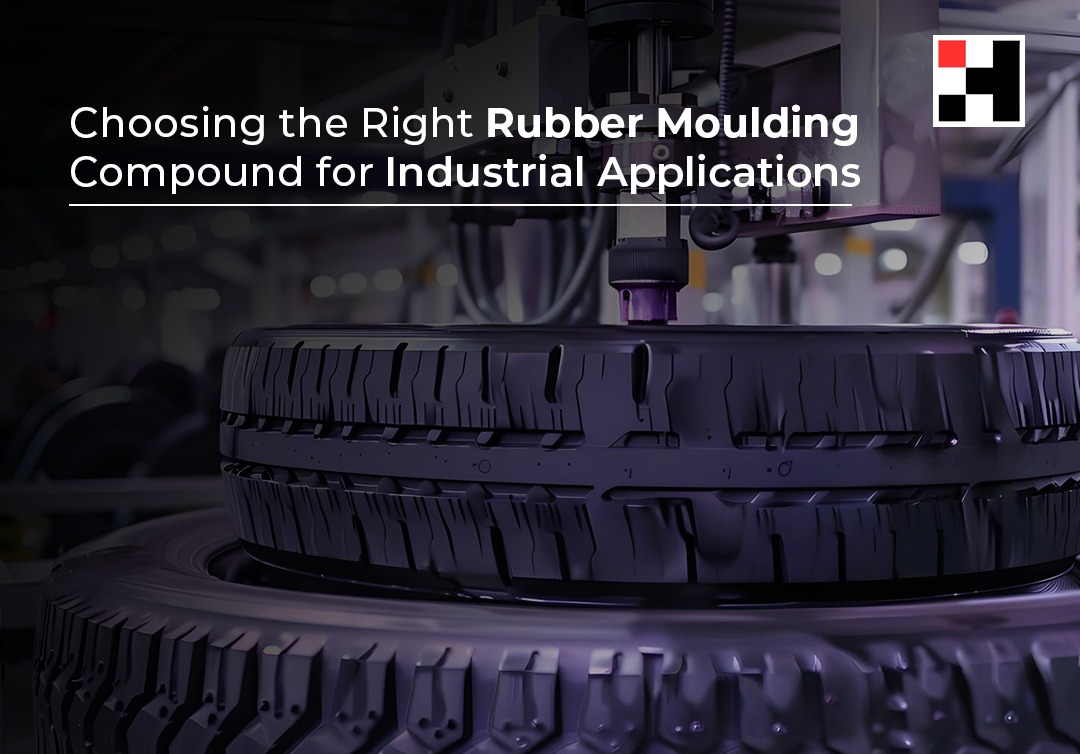
Choosing the Right Rubber Moulding Compound for Industrial Applications
The type of rubber molding compound you choose will affect how long your parts last, how well they work, and how dependable they are. When making tread rubber for heavy machinery or seals for harsh environments, it’s important to make sure the compound’s properties are right for the job so that it doesn’t break down and cost a lot of money. Industrial engineers have to choose between natural rubber (NR), nitrile (NBR), EPDM, or silicone, each of which works best in certain situations. Let’s look at the most important factors and kinds of compounds to help us choose the best one.
How to Learn About Compound Properties for Molding Success
A durometer of 40 to 90 Shore A, a tensile strength of more than 15 MPa, and an elongation of more than 400% are all necessary for rubber molding. You can make compression and injection molds out of sheets of rubber compound. The material is spread out evenly, which stops weak spots from forming.
Things You Should Consider:
- Normal temperature range: -40°C to 150°C
- Resistant to chemicals such as oils, solvents, and ozone
- Abrasion is important for the rubber on the tread.
- Compression Set: Seals and gaskets that only change shape 25% of the time or less
They won’t crack, swell, or harden while you’re using them if you match them up.
Natural rubber (NR) and man-made options
Natural rubber (NR) is a great material for mining and construction tires because it doesn’t rip easily and springs back quickly. It needs to be mixed with carbon black (30–50 phr) and antioxidants because it doesn’t hold up well to heat or chemicals.
Styrene-butadiene (SBR) is a common type of hot tread rubber that is great for truck retreads because it lasts a long time. It was mixed in a Banbury, and then sulfur was added.
Nitrile (NBR): Seals and gaskets that keep oil from getting through. The amount of acrylonitrile (18–50%) affects how well it can withstand oil.
EPDM is a type of roofing that can withstand weather and UV rays. It is also used to make seals for cars. Very good at keeping steam out.
Specialized Compounds for Important Purposes
Pre-cured Cold Tread Rubber: Slabs that have already been vulcanized and are ready to be retreaded. They are put on cold with cushion gum rubber and then put in an envelope to cure. Better consistency than the hot process, which can give tires in fleet operations 40 to 60% more life. Needs to be scheduled exactly for thicknesses between 8 and 12 mm.
Conventional Hot Tread Rubber: Making OEM tires by molding directly onto casings is cheap, but you have to be careful not to let them come apart.
Cushion Gum Rubber: A layer of uncured bonding material (1–3 mm thick) sits between the casing and the new tread. Very important for patch repairs and sidewall builds because it has a high tack and flows when heated and pressed. Sulfur donor systems stop holes from forming.
Rubber Compound Sheets: Flexible stock that can be shaped into any shape from 2 to 10 mm, such as parts for bridges and conveyors. Having consistent cure rates is very important.
How well is the molding process compatible?
Compression molding is best for rubber compound sheets with fewer than 500 parts. Can deal with a wider range of compound viscosity.
Transfer Moulding: Cushion gum rubber flows perfectly into hard-to-reach spaces.
Injection Molding: Making a lot of tread rubber parts with injection molding. Needs chemicals that are thin and won’t catch fire.
Pre-mixed slabs make it easier to make things. Check to see if the rheometer curves match your press cycle.
Environment and Load Factors
Abrasion: The tread rubber needs to be 50–60 IRHD hard and have a high abrasion index (>150).
Heat Aging: 70 hours at 100°C (less than 30% loss of properties)
Ozone: The surface is smooth (rating 0).
Adding more filler makes the compounding balances stronger, but they don’t bounce as much.
Standards for Testing Compound Validation
There are three groups in ASTM D2000: AA (general), BC (oil/heat), and BG (fuel-resistant).
ISO 2230 vulcanization properties.
Test for the uniformity of precured cold tread rubber with TR.
Before doing molding tests, get compound datasheets that back up these claims.
- Suggestions for Compounds That Are Specific to an Application
- Heavy Duty Tires: A blend of NR/SBR precured cold tread rubber and a skim coat
- Conveyor Belts: NBR rubber sheets with an oil-resistant top cover
- Seals: HNBR (hydrogenated nitrile) for when it’s really hot
- Roofing: EPDM calendared sheets
The best option is to mix your own, and suppliers who offer formulation support can help you save money on redesigns.
Quality Markers for Rubber Molding Materials
Batch Consistency: Property changes of less than 5%
Protection from Scorching: 121°C for 5–8 minutes
Cure Rate: 90% of the time in 10 to 15 minutes
Post-curing: the weight of the extraction is always the same.
Reliable sources give these specs up front.
Avoid these common mistakes when working with compounds.
Too soft: The tread wears out more quickly
Bad dispersion: weak spots and blooms
Fast Scorch: Messy with mold
High Compression Set: Stop leaks in the seal
Pilot molding checks that the parts fit before production starts.
Working with Proven Compound Knowledge
Get your tread rubber, precured cold tread rubber, cushion gum rubber, and rubber compound sheets from people who know how to use them for important tasks. Hitkari Rubber and other companies deliver formulations that have already been tested and guaranteed to work. This saves your money on trial and error and makes sure that your molded parts work the first time, every time.
Choosing the right compound means that it will work well in the industry. Make sure that the properties match the process and the environment.
Also read: Types of Rubber Compound Sheets and Their Industrial Uses